
Italy enters the global luxury real estate map
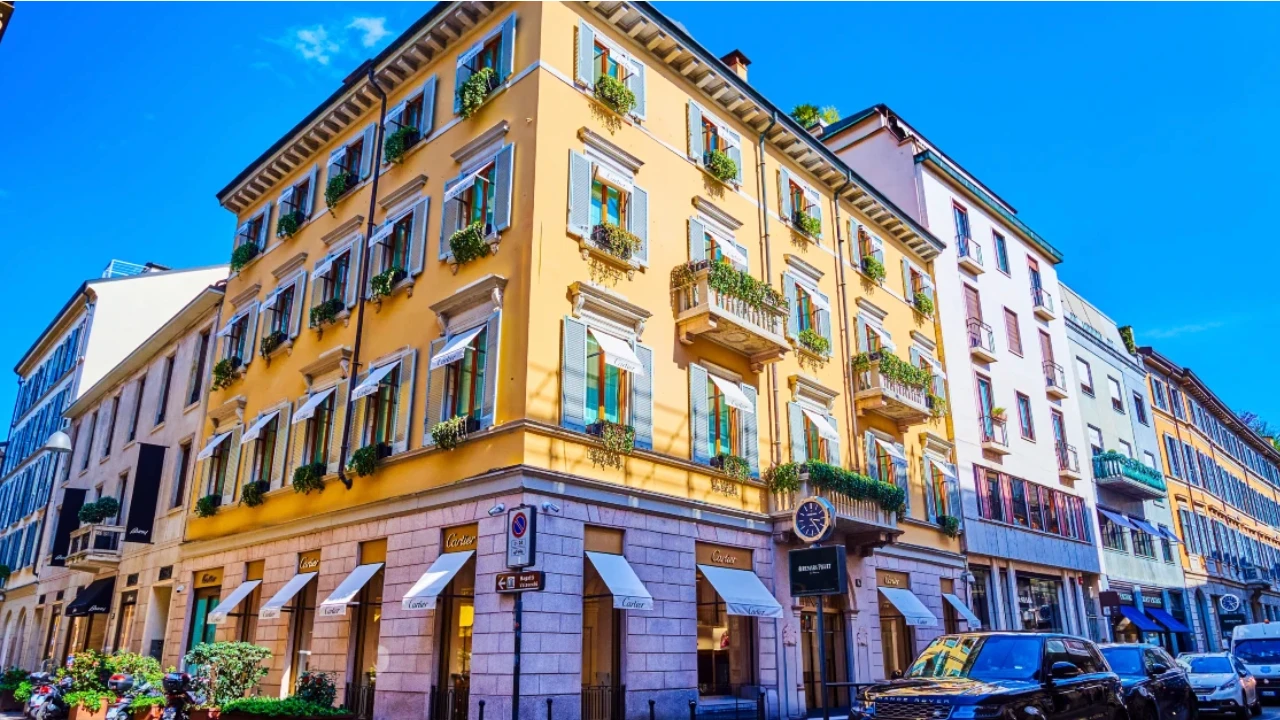
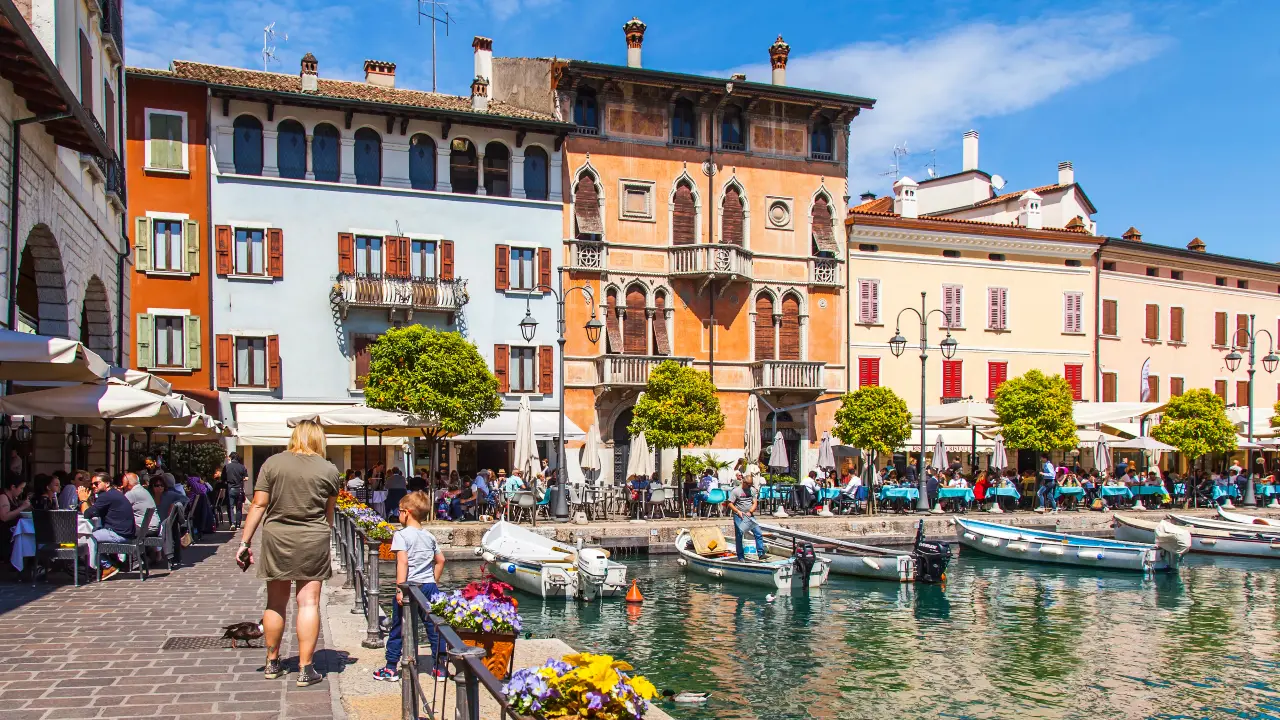
In recent years, Italy has rapidly risen in the global geography of wealth. This movement has deep roots: according to Savills, Milan, Rome, Tuscany, and the Costa Smeralda have firmly established themselves on the international map of the most desirable destinations for high-net-worth individuals (HNWIs).
The introduction of a €200,000 flat tax on foreign income has made the country more competitive in Europe, contributing to increasingly sophisticated international demand. Today, up to 80% of first-time sales on the Costa Smeralda now come from foreign buyers attracted by lifestyle, culture, and tax advantages, while Milan is consolidating its position as the main urban market.
Luxury real estate and flat tax: why foreign capital is looking to Italy
Luxury real estate is an asset class that operates according to its own logic, far removed from the fluctuations of traditional residential real estate. “In Italy, there is no risk of a generalized bubble,” notes Gabriele Torchiani, senior partner and head of the Observatory on Exclusive Residences at Tirelli & Partners, “because the size of the luxury market is very limited, considering that less than 1% of Italian transactions exceed €1 million (5,875 in 2024).”
Super-luxury real estate and the “Rolex effect”: status, rarity, and prestige
A tiny but extremely dynamic niche, fueled by a chronic shortage of truly exclusive offerings. A dynamic that Emanuele Barbera, president of the Sarpi group, sums up with an effective metaphor: “The Rolex effect.” In super-luxury real estate, demand is extremely specific and not very price-elastic,” explains Barbera, and is oriented only toward what embodies status, perfection, and prestige.
According to the Savills report, Italy is experiencing “an unprecedented phase of high-end real estate expansion,” as Danilo Orlando, head of residential at Savills in Italy, points out. “Milan, Rome, and Tuscany are attracting a new generation of global investors. The combination of tax advantages, lifestyle, artistic heritage, and culinary excellence makes our country unique in Europe for those seeking not only an investment but also a place to live and work.”
Trophy assets and historic residences: value that goes beyond yield
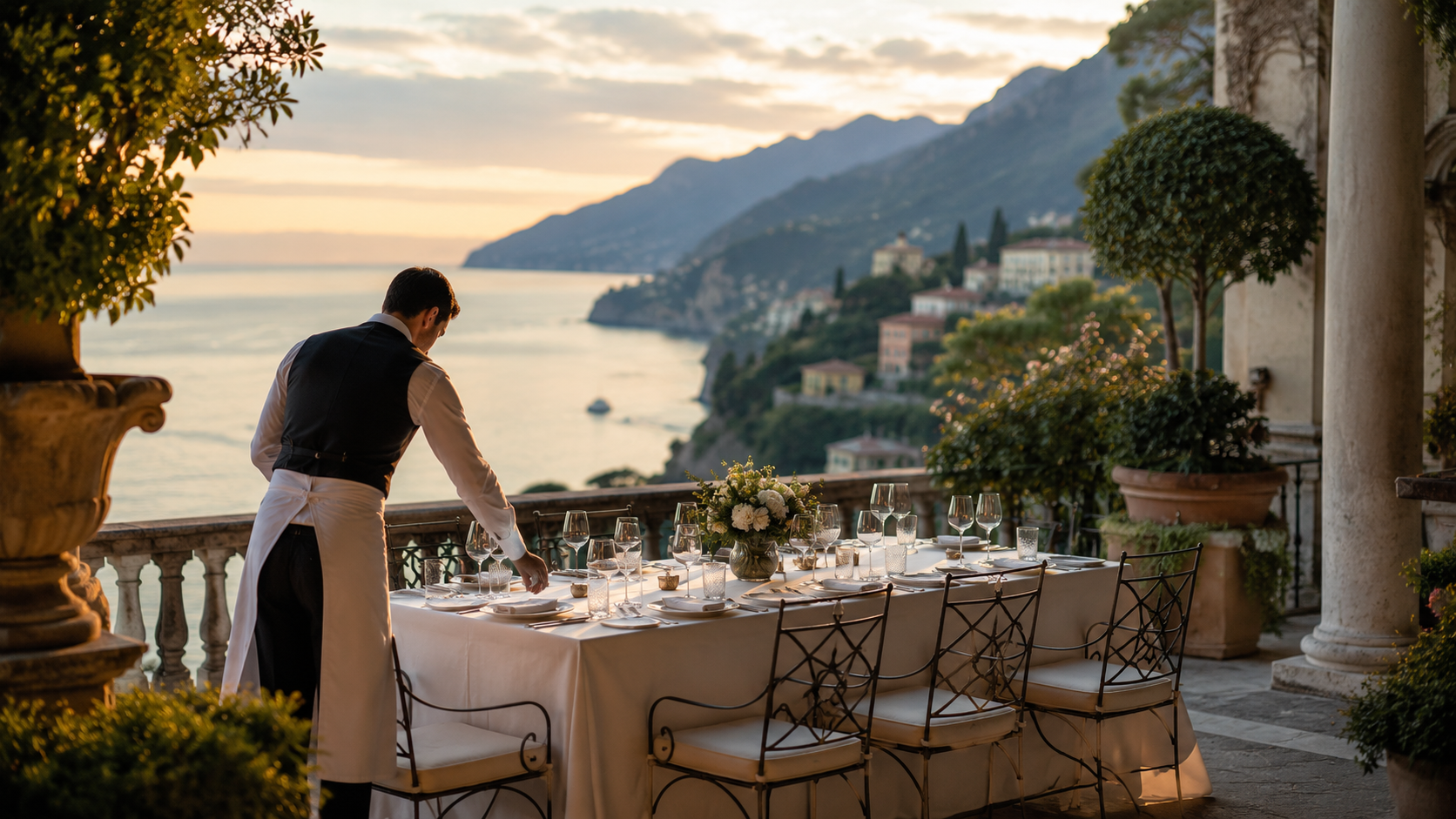
Meanwhile, the Savills report shows that historic residences – such as those on Lake Como or along the Amalfi Coast – are establishing themselves as true “trophy assets,” symbolic properties whose demand is growing beyond the logic of yield. At the same time, interest is growing in turnkey properties, characterized by “spaciousness, privacy, and high construction standards,” elements that have become essential for the prime segment.
How much is luxury real estate worth in Italy: prices, thresholds, and segments
But what market are we talking about when we refer to Italian luxury real estate? The Tirelli & Partners Observatory on Exclusive Residences identifies a threshold for access to the prime segment in Milan set at 1 million, with a classification that distinguishes between “top” properties (3-6 million) and “luxury” properties (over 6 million). “In iconic locations (Lake Como, Capri, Portofino, Costa Smeralda, Cortina, etc.), where properties are often villas, castles, and the like, the values that distinguish the different segments vary, but there is no unanimously accepted standard of separation,” explains Torchiani. He points out that the market is driven by scarcity.
Micro-location and scarcity: what really makes a property high-end
“Less exclusive supply = fiercer competition, very fast closing times, and smaller sales discounts,” explains the senior partner and head of the Tirelli & Partners Observatory of Exclusive Residences. “Value is never determined by a single element; it is a combination of rarity + quality + context. Micro-location, architecture, view, outdoor spaces, privacy, security, layout, cultural value: the more these elements are concentrated in a single property, the more the property can truly be defined as high-end.”
The geography of super-luxury: three locations, three different markets
A complementary view comes from Barbera. “From our national observatory, the real estate market is moving at two speeds,” he explains. “The super-luxury niche is growing thanks to international investors who are only looking for ‘perfect’ properties that are non-negotiable.”
The emblematic example is the perfect 400 m2 penthouse with garage and sea view in Portofino: “It is practically priceless, or in any case reaches record and non-negotiable prices,” explains Barbera, who then goes on to say that “the same penthouse, located in Santa Margherita, can be sold very well (albeit at significantly lower prices than in Portofino) but requires finding the right customer, and this lengthens the time frame. If, on the other hand, the exact same property were located in Rapallo, it would be very difficult to sell, even at a significantly lower price, simply because super-luxury clients are not interested in that specific area.” This is the geography of super-luxury: three contiguous locations, but three completely different markets.
The most sought-after areas?
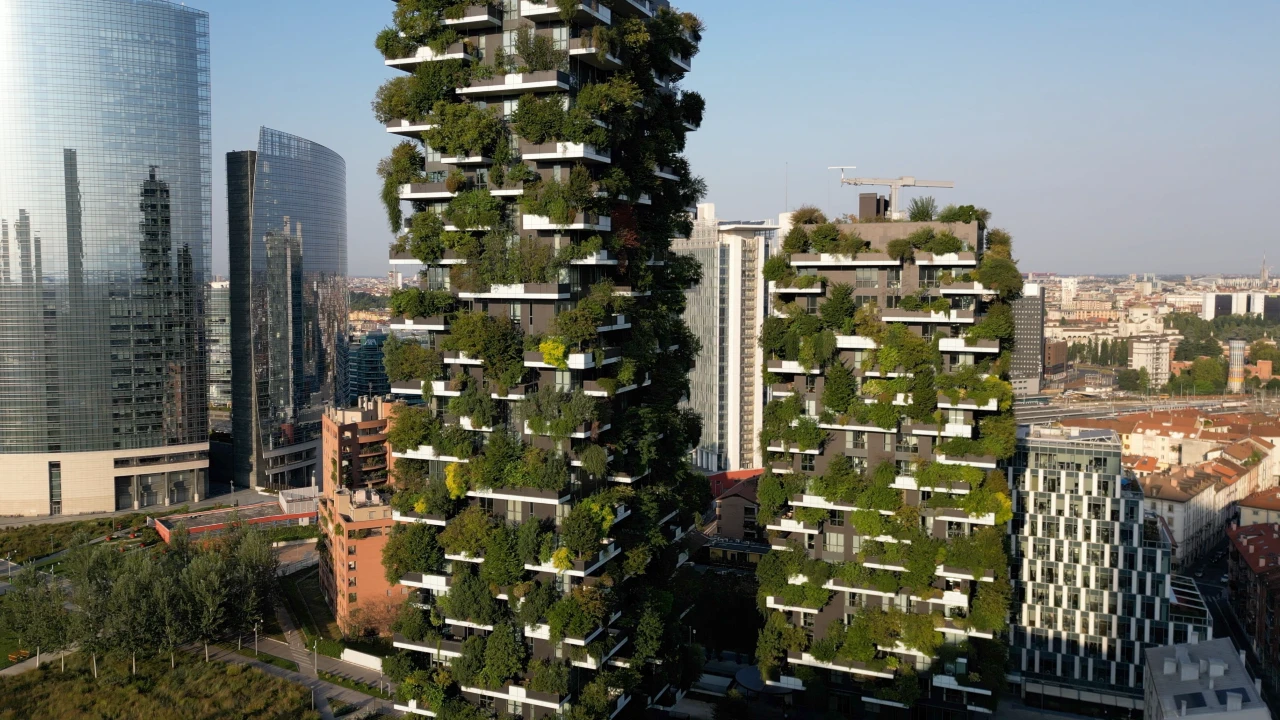
“Art cities and exclusive locations, followed by Milan, Rome, and Naples,” replies Barbera. “But customers only want two types of product: period buildings or new AAA-class constructions, with accessories such as terraces, gardens, and garages.”
Why HNWIs buy luxury real estate: emotion and uniqueness
What is the underlying motivation that drives HNWIs and UHNWIs to purchase luxury real estate? Barbera is clear: “Revaluation is secondary. What counts is satisfying an emotional and status need. For this reason, customers are willing to pay the asking price only if the product offers a unique and prestigious component that clearly differentiates it from other offerings on the market. It is this exclusivity that creates real value for the high-net-worth segment.” This means that uniqueness is the currency of super-luxury: only what has no equivalent retains value.
Generational transition and new opportunities in luxury real estate
The other major variable is generational transition. The Savills report shows that, globally, the new generation of HNWIs (Millennials and Gen Z) will inherit over $18 trillion and will direct their investments towards locations that embody well-being and sustainability.
“We estimate that over 50% of Italian real estate assets will be transferred within the next twenty years. Of this amount, we expect that about 50% will be put up for sale,“ reveals Barbera. He concludes by saying, ”The reasons are mainly related to inheritance: heirs are on average 60 years old, often already own other properties, and longer life expectancy means a growing need for liquidity to support an adequate lifestyle, the costs of which have increased significantly compared to four decades ago. This trend represents a profound transformation of the market and a crucial investment opportunity.”
(Article taken from We Wealth magazine no. 85, December 2025)