
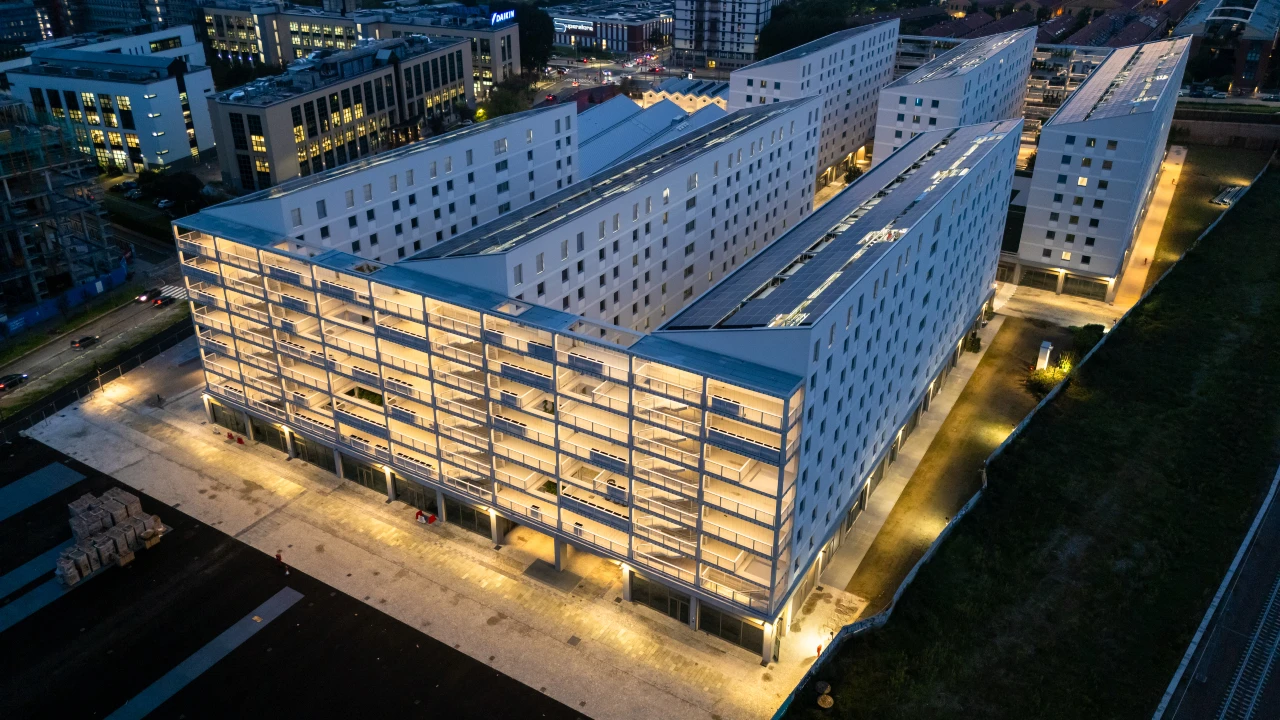
Over €5 billion in total economic impact, including infrastructure investments, tourism spending, and local benefits, approximately 2.5 million visitors expected, and a system of works involving Lombardy, Veneto, and Trentino-Alto Adige. These are the key figures for the Milan-Cortina 2026 Winter Olympics (scheduled for February 6-22), according to a report by the research department of Banca Ifis, which captures the economic impact of one of the most important economic and urban transformation projects in northern Italy in recent decades.
In fact, most of the resources are not earmarked for temporary structures, but for infrastructure, urban regeneration, and new real estate projects designed to remain in place even after the Olympic flame has been extinguished.
The Olympic flame arrives in Milan: the 2026 Winter Olympics are underway
While the market’s attention is already focused on the post-2026 legacy, the Games are now in full swing.
In the early afternoon of February 5, the Olympic flame will arrive in Milan, following a route that connects the historic center with the suburbs and touches on some of the city’s most iconic locations. It is expected to arrive at Piazza Duomo at around 7:30 p.m.
On February 6, the torch will make its final stop, concluding with the opening ceremony at the San Siro Stadium, officially kicking off the 2026 Winter Olympics.
The Milan-Cortina effect on the real estate market
In this context, the real estate market has been dealing with the “Olympic effect” for some time now. The impact is visible both in the short term—with growth in demand for temporary rentals and rentals linked to events, tourism, and mobility—and in the medium to long term, where the real issue becomes the post-2026 legacy: new neighborhoods, student housing, infrastructure, and a different geography of opportunities for investors and operators. This legacy will not be homogeneous, but selective, and is already reshaping the real estate attractiveness of some key areas of Milan and its hinterland.
2026 Olympics: accelerator or real estate driver?
According to Luca Dondi dall’Orologio, CEO of Patrigest (Gabetti Group), the Olympics should be viewed through a double lens. “Milan-Cortina can be interpreted both as a strong accelerator of trends already underway and as a real real estate driver,” he explains. “Major international events have historically proven to be able to compress the time frame for urban transformation: the influx of investments and users increases the economic sustainability of complex operations, making projects feasible that would otherwise have taken much longer to complete.”
The parallel with Expo 2015 is inevitable. “Expo transformed the northwestern quadrant of Milan, now one of the main hubs of urban development thanks to the Mind project,” recalls Dondi. Similarly, the Olympics are focusing the attention of operators on areas that, without a catalyst of this magnitude, would probably have attracted interest more gradually. “This is the case, for example, with the railway stations, whose regeneration process—which began before the Games—is now reinforced by the location of sports facilities and the growth in residential and commercial demand, especially in the southern part of the city,” adds Dondi.
This concept is also reflected in the opinion of Francesco Nicchiarelli, engineer and founding partner of Via Ingegneria, who believes that “major international events are capable of accelerating urban and infrastructural redevelopment processes that would otherwise take much longer. The Olympics, he observes, are already giving a significant boost to investment in sustainable mobility, infrastructure modernization, and the enhancement of public spaces, promoting a gradual return of the city to pedestrians and citizens.”
Milan, investors, and rents: the Olympics effect is already visible
While the legacy will mainly be felt in the medium to long term, some effects are already visible. According to Fabiana Megliola, head of the research department at the Tecnocasa group, “the positive impact of the infrastructure has already been partially discounted in 2025, with greater interest from investors who have purchased properties to generate income during the Games.”
Areas and house prices in Milan: estimates for 2026
The Tecnocasa network reports that the Olympic effect has been particularly concentrated in certain areas of Milan and its hinterland, including Rogoredo, Ripamonti, and Assago, especially in terms of short-term and seasonal rentals and price expectations. “Private investors have already made their moves in anticipation of the event, focusing on areas affected by the Games or quickly connected to them,” Megliola points out.
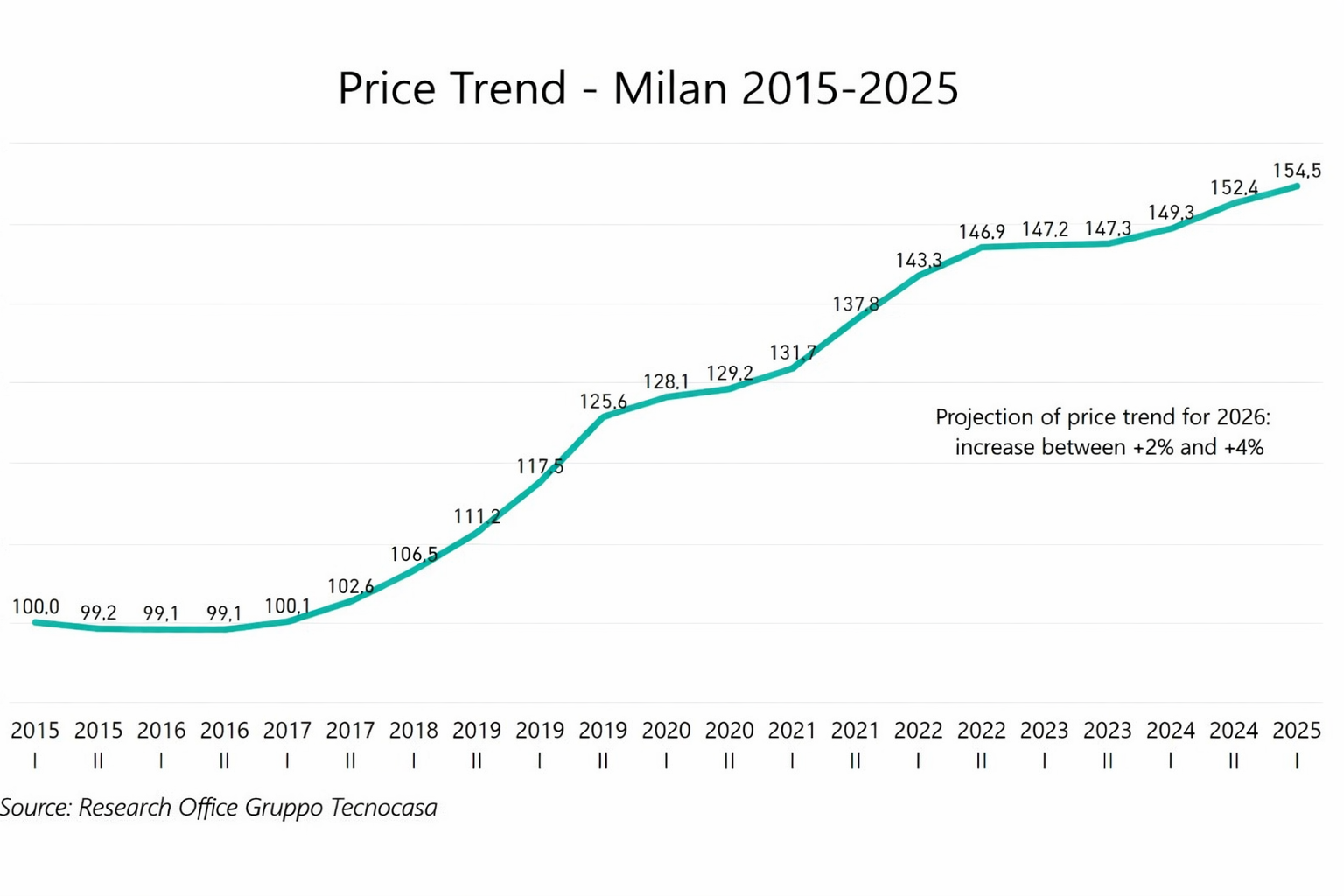
On the value front, the forecast remains cautious but positive. “Regardless of the Olympics, we estimate a price increase of between 2 and 4% for Milan in 2026,” explains Megliola, noting that the arrival of around 2.5 million visitors, many of whom will be foreigners, will have an indirect effect on accommodation, commerce, and catering, generating wealth that could then be invested in real estate.
The issue of rents and the risk of imbalances in the housing market
The issue of rents remains central. On the one hand, demand continues to exceed supply; on the other, the regulatory framework and the choices made by local administrations could alter the balance. “We cannot rule out the possibility that those who currently practice short rent may switch to transitional rents, as already happened in 2025,” notes Megliola, recalling that it was precisely in the neighborhoods most affected by the Olympics that there was an increase in investment purchases for short-term rentals.
According to Dondi, one risk is that of growth in values not accompanied by an adequate social balance. “It is essential to prevent the increase in real estate prices from generating exclusion,” he warns. After the slowdown in short-term rentals linked to the CIN, “a new phase of growth is plausible, supported by greater international visibility and the strengthening of the Milan brand, with effects that could go beyond the Olympic horizon.”
The post-2026 Olympics legacy: Porta Romana and student housing
The Olympic Village after the Games
The real test, however, will be after the Games. Here, the Porta Romana Olympic Village is a case in point. “The Milan-Cortina 2026 Olympics will leave Milan with an important urban legacy: we are thinking in particular of the Porta Romana Olympic Village project, completed 30 days ahead of schedule and the first step in the wider redevelopment of the former railway yard of the same name,” – emphasizes Gabriele Bonfiglioli, CIO of Coima Sgr – After the Games, the Village will be converted into the largest student housing facility in Italy (a student housing facility with approximately 1,700 beds, ed.), helping to increase the housing supply for young people and students living away from home and strengthening Milan’s international appeal as a university city.”
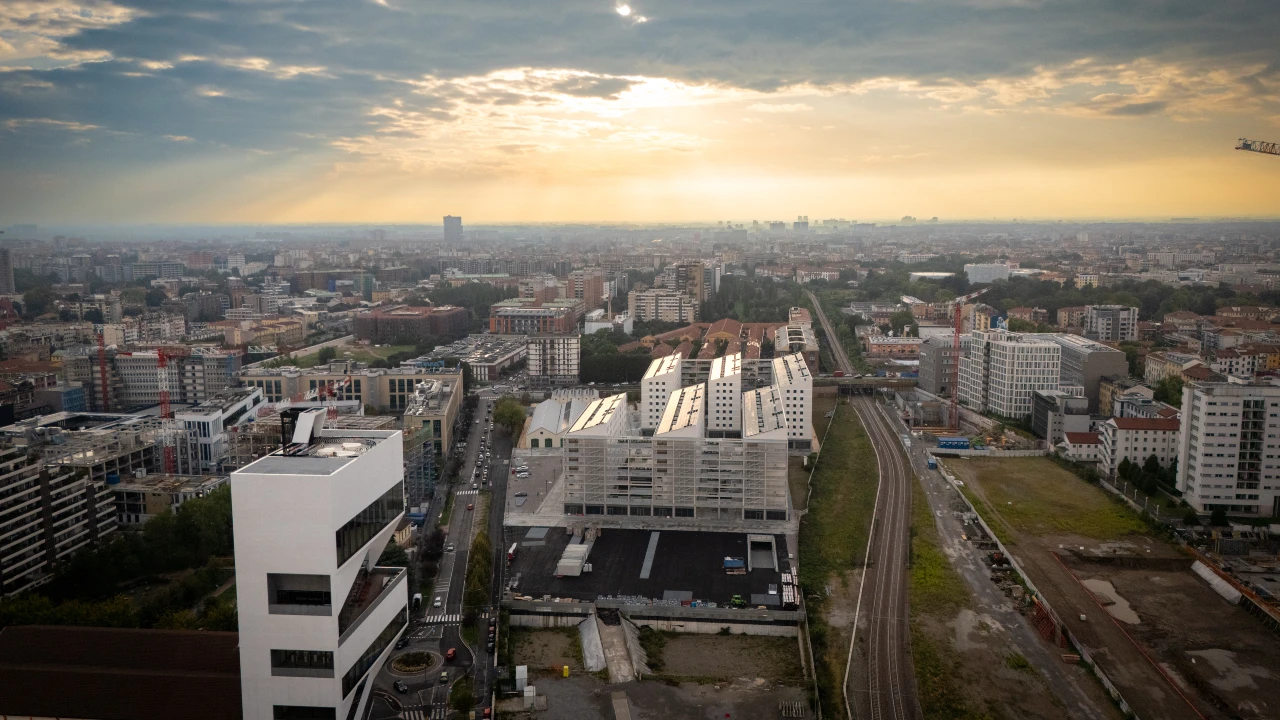
(Olympic Village in Milan – Courtesy of Coima)
Urban regeneration and the Porta Nuova model
For Bonfiglioli, the project embodies a model of urban regeneration focused on sustainability, already successfully tested by Coima in Porta Nuova: “Resilient neighborhoods, with integrated functions and new-generation services,” capable of generating long-term value.
Which real estate assets will attract capital after 2026
Looking beyond 2026, the Olympic legacy fits into a broader interpretation of the future of Italian real estate. “The segments and real estate models with the greatest solidity and ability to attract Italian and international capital on the Milan market are residential, in all its forms, from student housing to build-to-sell and build-to-rent, and advanced office, characterized by high energy performance, especially in central and well-connected areas.
These two asset classes can maximize their attractiveness when included in large mixed-use urban regeneration projects, focused on environmental and social sustainability and the ability to integrate neighborhood communities,” continues Bonfiglioli, noting that alongside the more traditional segments, infrastructure assets are also emerging, such as data centers and development programs related to artificial intelligence and energy, “now supported by solid demand, insufficient supply, and ESG criteria that are increasingly guiding the choices of global investors.”
Beyond Milan: a two-speed market?
The issue of the redistribution of opportunities across the territory remains open. The risk of a “two-speed” market exists, admits Dondi. “Milan is set to experience a more significant impact in the post-Olympics period, thanks to its economic and financial centrality and a continuous calendar of major events.
However, Milan-Cortina may also represent a concrete opportunity for a wider redistribution of investments, particularly in the Alpine regions, provided that the sports infrastructure is used continuously over time,“ continues Dondi. ”It is no coincidence that 2025 saw an increase in investment operations in the mountain hotel sector, albeit with selective interest, concentrated on the most structured and resilient locations.
The true legacy of Milan-Cortina 2026
Ultimately, Milan-Cortina 2026 appears less like a breaking point and more like a powerful multiplier of dynamics already in place. “The Olympics have served as an operational catalyst, accelerating coordination between stakeholders and the adoption of higher ESG standards,” concludes Bonfiglioli. But the direction of the market was already set.
The real challenge, as Nicchiarelli points out, will be “to accompany this transformation with a vision that goes beyond the event”: only in this way can the Olympic legacy be translated into lasting economic, social, and urban benefits, capable of having a lasting impact on quality of life and the balance of the real estate market.
(Article taken from We Wealth magazine no. 87, February 2026)
(Opening photo: Courtesy of Coima)