

Capital preservation and returns remain two of the main priorities in portfolio construction, especially at a time when volatility and instability continue to shape markets, as Capgemini’s World Wealth Report 2025 also highlights. Yet beyond traditional instruments, there are less familiar markets that can offer interesting opportunities in terms of diversification, efficiency and resilience, particularly in more challenging environments.
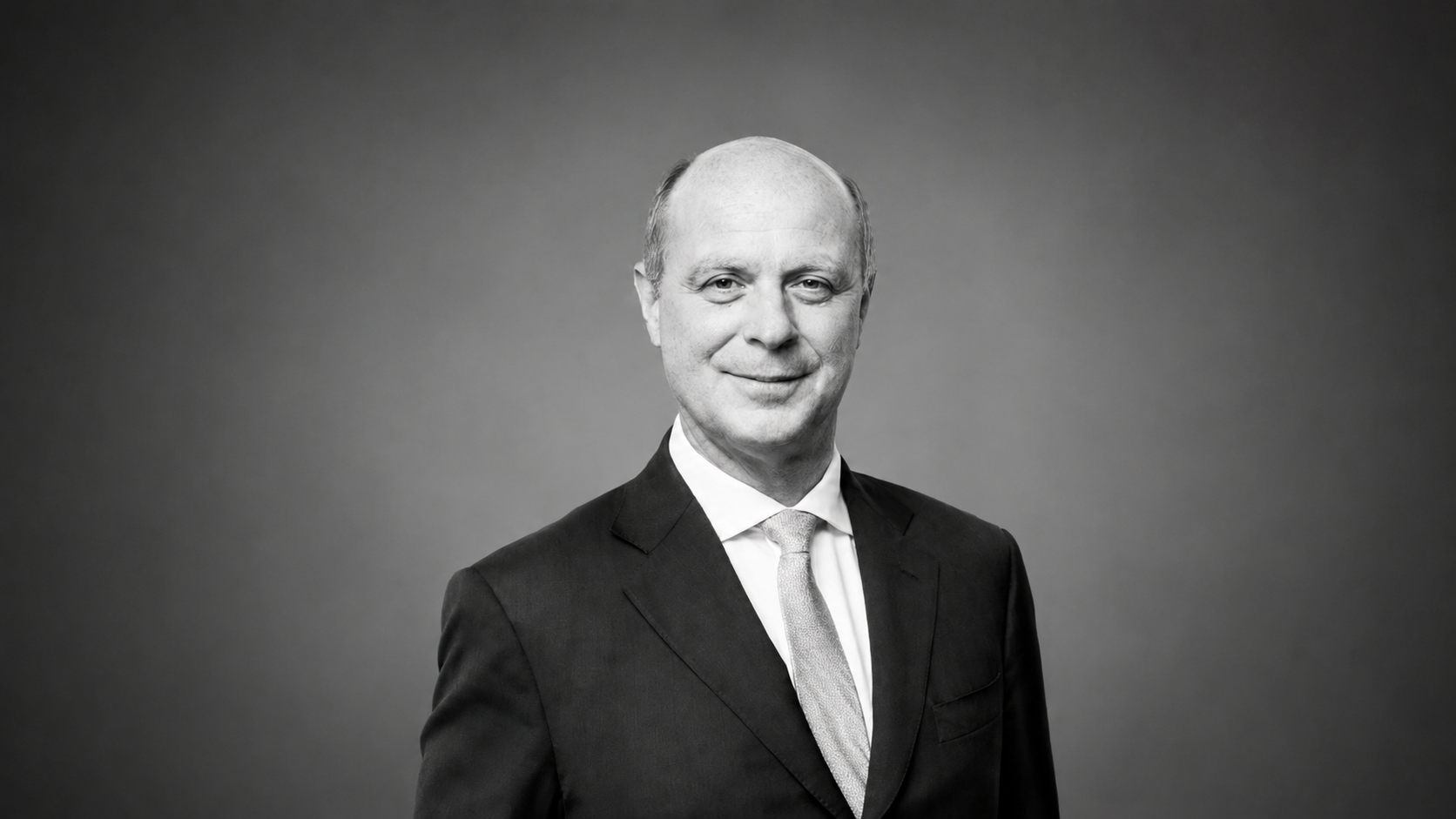
One of them is Lloyd’s of London. To better understand the opportunities it may offer and how investors can approach it effectively, We Wealth spoke with Kate Tongue, Executive Director at Argenta Private Capital Limited, an FCA-regulated advisory firm that structures, optimises, and manages investor portfolios in the Lloyd’s market.
What makes the Lloyd’s of London market such a distinctive opportunity within the broader alternative investment universe?
Lloyd’s is a unique marketplace where complex global risks are placed and underwritten by businesses or insurance ventures called syndicates. In order for the syndicates to write the risk, they need investors to put up capital to support their underwriting. In return for that capital, investors get a share of the underlying underwriting results from the syndicates.
The Lloyd’s market hosts over 100 syndicates that underwrite a wide range of risks across multiple jurisdictions. That gives investors exposure to a highly diversified marketplace in terms of geography, lines of business and underwriting expertise. The quality of those underlying businesses and the technical expertise of the underwriters is a key draw to investors coming in as well.
And it has a very strong financial rating environment. Lloyd’s is rated AA- by Fitch and S&P. The most recent Lloyd’s results are a testament to the market strength: the 2025 pre-tax profit reached 10.6 billion, which is up 10% on last year, and gross written premiums have grown to 57.9 billion, with investment returns on capital reaching 22%. It’s a really strong and credible market that has been around for over 300 years, providing something completely different to what investors have seen or can access elsewhere.
What are the core principles behind Argenta’s investment philosophy?
APCL have been around for 60 years and are owned by Hannover Re, the world’s third-largest reinsurer. The firm is registered with the FCA (Financial Conduct Authority) and supports investors across the full scope of their Lloyd’s investment.
We help structure the investment from the outset. We assess the end client’s risk appetite, design and advise on an investment strategy suited to their specific needs, and act as a conduit between Lloyd’s, the syndicates and the wider market. Our deep market knowledge and credibility allow us to guide clients through their entire journey when investing in the Lloyd’s market.
Over the last 20 years, our clients have generated a long-term average return on capital of more than 17%. But it is not just about returns, it is also about capital efficiency. Part of our role is to identify syndicates that offer that efficiency.
Another aspect of capital efficiency relates to the backstop capital investors are required to provide to support underwriting. That capital can remain in the investor’s name and continue to generate returns. For example, it could be held in a stocks and shares portfolio and still produce interest or dividend income, in addition to the 17% return on capital I mentioned earlier.
We refer to this as the double use of assets: an investment portfolio can continue generating returns while also being used to support the underlying Lloyd’s investment.
What does Argenta’s support for investors look like in practice?
I think we really act as an intermediary and a translator. Lloyd’s can be quite complex, and our role is to break down those barriers and make the market more accessible. It is often described as one of the world’s best-kept secrets. People often say, ‘Why haven’t I heard about this before? It sounds fantastic.’ But there are complexities, and we try to simplify them as much as possible. Our role is to support investors from the beginning of their investment journey through to the end.
In most cases, this is a long-term investment. Our clients tend to stay with us and place their trust in us for decades. For UK-resident individuals, it can also be a very tax-efficient structure. As a result, many investors hold the investment throughout their lifetime and may eventually pass it on to the next generation. Part of our job, therefore, is also to explain the investment to the next generation, ensuring they understand both how it works and the risks involved.
The approach is very much tailored to each individual investor’s risk appetite and investment objectives. It is a flexible investment in terms of the amount committed, the level of risk taken, the geographical spread and the type of capital used to support it.
Another important part of our role is understanding the market cycle. Insurance is a cyclical market: there are periods of stronger profitability, and others of lower profitability or potential losses. Our job is to understand that cycle and help clients increase their exposure when conditions are more favourable, while reducing it when profitability is weaker. So, ultimately, we act as both translator and expert adviser.
What are the advantages of different classes and lines of business within Lloyd’s? And how do you match risk appetites to portfolios within Lloyd’s?
There are around 200 different classes of business written at Lloyd’s, across almost every territory in the world, creating a highly diversified spread of risks.
That diversification matters. If you think about it, a motor policy is not necessarily affected by the same factors as political violence, a windstorm or cyber risk. Different lines of business are exposed to different drivers, which means they are unlikely to deteriorate all at the same time. As a result, the capital required to support a diversified portfolio can be significantly lower than if you were writing only one type of risk or taking exposure to a single insurance company.
In terms of risk appetite, we assess each new client carefully to understand what they want to achieve through a Lloyd’s investment – whether the priority is tax efficiency, diversification, a particular investment horizon, or involving the next generation. We then design a portfolio around those objectives.
Some areas of business are riskier than others. Cyber, for example, is relatively capital-intensive, but it can also generate significant returns. So ultimately, where you allocate capital depends very much on the investor’s risk appetite and on the level of capital efficiency they are seeking.
What role can the insurance market play in a broader portfolio today, particularly when it comes to diversification, income and protection?
As I’ve said, Lloyd’s offers strong long-term returns on capital to investors, but another key advantage is that Lloyd’s returns have historically shown very low correlation with other asset classes. That means they may still deliver returns even in difficult macroeconomic conditions, making them a valuable portfolio diversifier. For example, during the global financial crisis in 2008, the FTSE 100 fell by around 31%, while our clients generated a healthy return on capital of 18%. Similarly, in 2020, during the Coronavirus pandemic, our clients were up nearly 4%, while the FTSE 100 declined to a loss of 14%.
Lloyd’s returns are generally not directly impacted by the broader global economic environment in the same way as many traditional asset classes, which is why they can play a genuine diversification role within a portfolio. In today’s volatile environment, that is particularly valuable: the market offers strong return potential with limited exposure to the economic cycles that affect equities, bonds, real estate and other investments.
Looking ahead, I expect the Lloyd’s market to play an increasingly important role in wealth strategies, including for the next generation of investors, both for preserving capital, and for diversification of portfolios.