
Tuscany property: why foreign investors keep coming
Tuscany continues to attract foreign investors like few other regions in Europe. The market is driven by quality of life, culture, accessibility (two international airports in Pisa and Florence) and a real estate heritage that is unique worldwide. But interest is also powered by hard numbers: rising prices, solid demand, tax incentives and increasingly scarce supply.
“Our office sells around 95% of properties to foreign clients. That’s slightly higher than most of our other Italian offices, where the figure is still strong at around 80%,” says Alessandro Deghè, CEO of Serimm Srl, Knight Frank LLP’s Italian partner.
Who buys and where: the new international flows
The most active buyers come from Germany, the Benelux, Scandinavia, the Uk and the United States. In recent years, the French and Swiss have also increased significantly.
“Americans increased after Trump’s election, although not to the extent often portrayed. They mainly buy in the Florence and Chianti area, while in north-west Tuscany we see more Northern Europeans,” Deghè explains.
“Tuscany remains the strongest market in Italy for second-home purchases by foreigners. Lake Como is certainly very lively at the moment, but it’s a much smaller area than Tuscany. Looking at the overall numbers, demand for Tuscany is decisively higher,” he adds.
Rising prices: Lucca leads Tuscany’s property market
Over the past five years, prices have risen sharply:
• Lucca: +27%
• Florence: +24/25%
• Siena: more moderate growth, being further from airports, but the whole area has appreciated post-Covid as buyers sought country homes away from large cities
• Forte dei Marmi: stable, but with very high absolute values — prices have reached €25,000–35,000/sq m.
“In Lucca, a high-end renovated property today averages between €7,000 and €7,500/sq m. That’s an average between historic centre and countryside — where you can go higher. Florence is around €13,000/sq m, Val d’Orcia about €5,000/sq m,” Deghè notes.
Less “obvious” areas are also gaining traction, such as the hills behind Versilia, the Bolgheri area and the southern coast down to Argentario, where demand focuses on farmhouses with sea views and historic villas.
What foreign buyers want: lifestyle and historic value
“Most of our clients buy for lifestyle: they want a second home where you live well, eat well, get there easily and breathe culture. They often look for historic properties, from the 1400s to the 1800s, including within historic centres, or restored farmhouses immersed in nature,” says Deghè.
It’s not just about holidays. Some investors take advantage of the €200,000 flat tax designed for high-net-worth individuals relocating to Italy.
“We’ve also seen clients coming from the Uk after the changes to the remittance basis regime. But interest in Italy is global,” he adds.
Purchases and returns: focus on capital appreciation, not income
Those who buy in Tuscany are not chasing immediate yields.
“Only 40–50% rent out the property, often just to cover running costs. Buyers aren’t purchasing to generate income: they want to enjoy the home and maybe see it appreciate over the long term. They carefully assess how much to invest in renovations to avoid selling at a loss, even 10 years down the line.”
Typical price brackets for the most sought-after homes? It depends on the area:
• Florence and Chianti: €4–6 million
• Lucca and Val d’Orcia: €2–4 million
• North-west coastal and hilly areas: €2–3 million
Tuscany vs the rest of Europe: still competitively priced
“Compared to other international destinations, Italy is still good value. The French Riviera is significantly more expensive, the Balearics are broadly in line (with exceptions), the Algarve is still slightly cheaper — but Tuscany offers an ideal balance between value and quality of life,” Deghè explains.
The challenges for foreign buyers
“For a foreign client, the buying process can feel complicated: due diligence, notaries, landscape or agricultural restrictions, and regulations that change case by case. But we provide end-to-end advisory — we literally take them by the hand all the way to completion,” says the CEO of Serimm Srl, Knight Frank’s Italian partner.
Transaction costs typically range between 10–12% of the purchase price (including notary, taxes, agency fees and due diligence). One interesting advantage versus other European countries: after five years, no capital gains tax is due on resale.
The outlook? Little supply, lots of demand
“There’s very little on the market, and that keeps prices high. Last year, in my area, values rose by 6%, and I’d be surprised if that didn’t happen again this year. Tuscany has solid demand and a value proposition that’s hard to match,” Deghè concludes.
Between art, nature, culture, food and wine, sea and rolling hills, Tuscany today is one of Europe’s most coveted regions to live and invest in.
“Lifestyle, accessibility, territorial diversity and political stability: that’s why those with means and vision keep choosing Tuscany,” he says.
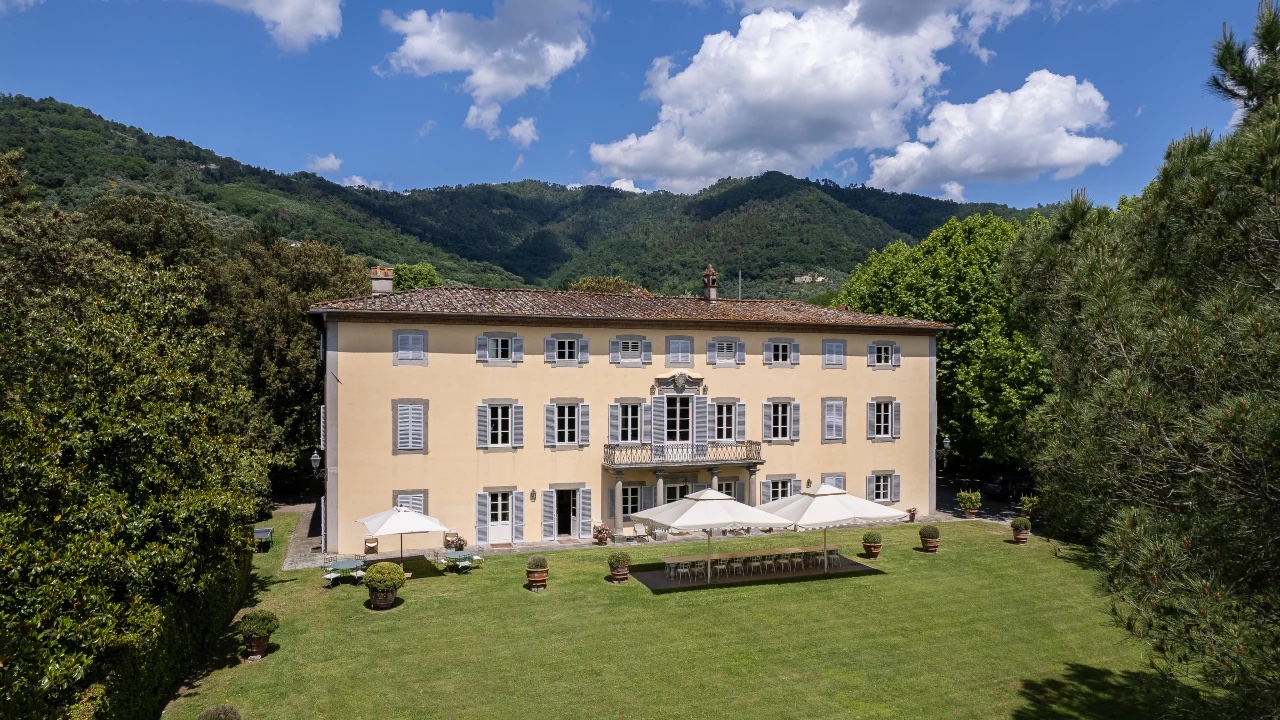
(Opening photo: Photo Credits Serimm Srl – Knight Frank’s Italian partner – Villa Boccella, Lucca, Tuscany)