

At Mitos, much of our work is with people considering a move to Italy, and the question I am asked most is a simple one: where should we actually live? People usually expect a single answer — one region, one city, one obvious winner.
The response is that it depends almost entirely on who is asking. An entrepreneur relocating a business, a couple retiring to the sun, and a family with school-age children are solving three different problems, and they end up in three different parts of the country. The pattern I see in practice is less a ranking than a map, sorted by phase of life and priorities.
Milan and the north: the non-dom effect
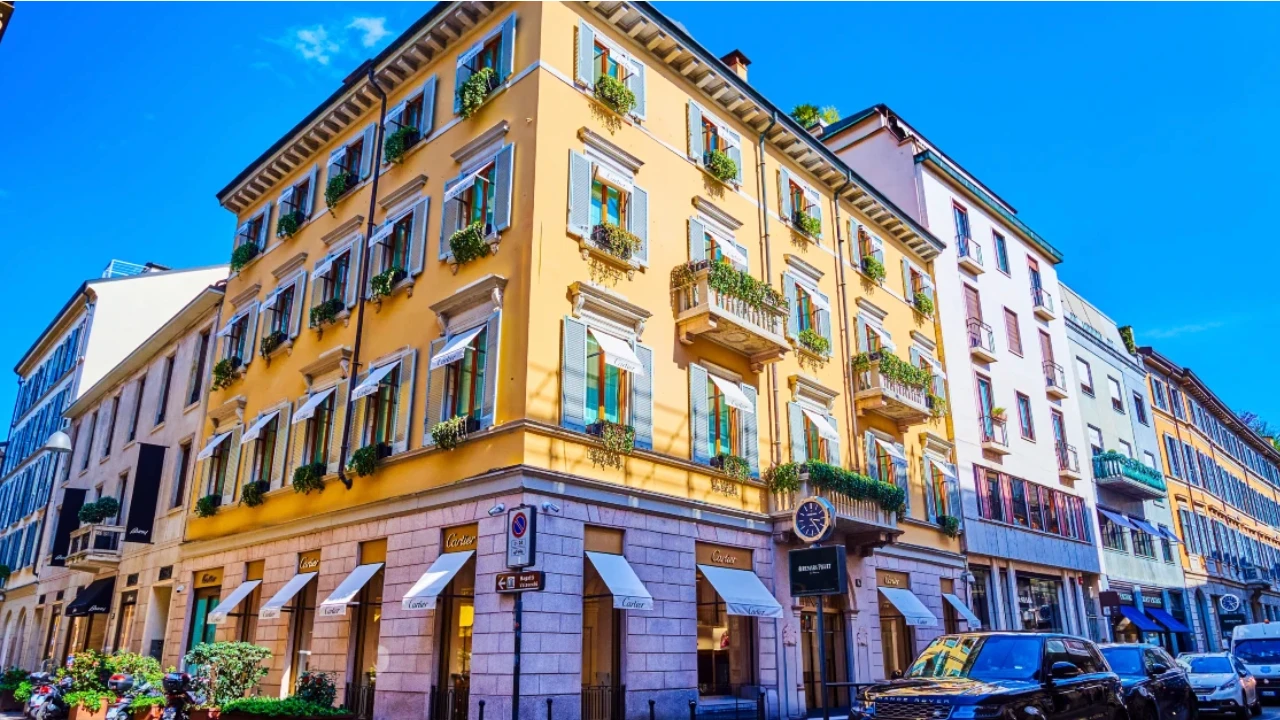
The most visible movement of the past two years has been toward Milan. When the United Kingdom abolished its non-dom regime in April 2025, a wave of internationally mobile wealth — entrepreneurs, bankers, fund principals, many of them long-time London residents — went looking for a new base.
Italy’s €200,000 flat tax on foreign income (now €300,000), combined with a relief on inheritance tax for overseas assets, made Milan the natural landing point. It is Italy’s financial capital, it is genuinely international, and it offers the professional network and services this group expects.
The consequence has been price and business. International buyers now make up a materially larger share of the Milan market than they did a few years ago, and residential values have climbed sharply — the city’s real estate has overtaken Venice as the most expensive in Italy. For those relocating, that cuts both ways. The upside is a liquid, cosmopolitan market with everything a globally minded family needs close at hand.
The downside is that Milan increasingly costs what London or Paris costs, and the city’s weather, pace and summer heat are not to everyone’s taste. It suits people who want a career, a network and a European hub. It suits less well those who came to Italy looking for a change of rhythm.
The northeast: proximity and lifestyle
Many people who want to be near Milan choose not to live in it, and the northeast — Veneto in particular — has seen strong and growing demand as a result. The appeal is above all a lifestyle one. It sits within easy reach of Milan while offering a quality of daily life the city can struggle to match: the Dolomites on one side and the Adriatic on the other, real nature on the doorstep, and a calmer, more spacious rhythm.
The towns are prosperous and well run, the food and wine culture is exceptional, and the healthcare is among the best in the country. For those who want the connectivity and services of the north but a gentler, more grounded version of daily life, this is often where the conversation lands.
Tuscany and the romance of Italy
Then there is the group that came for Italy itself. For many buyers the whole point of the move is the history, the art, the landscape and the food — and Tuscany sits at the centre of that idea. It is the version of Italy people fall in love with before they ever look at a tax table. What makes it more than a romantic choice is that the practicalities increasingly line up: fast trains connect Florence to Milan in well under two hours, and the coast is close, with destinations such as Forte dei Marmi carry genuine international prestige. Tuscany lets people have the postcard and the infrastructure at once, which is why it holds its appeal across generations of buyers.
The south: slower, unspoilt, and tax-friendly
Further south, the pull is first of all about a way of living. This is the Italy of a slower pace, of long lunches and unhurried afternoons, of a landscape and a sense of community that much of Europe has lost. It feels authentic and largely unspoilt — the version of Italianness people imagine when they picture the country at its most genuine. Within the south, demand concentrates on Puglia and Sicily, the two regions with the strongest international recognition and the most developed property markets.
On top of that lifestyle sits a real tax advantage. The 7% flat tax for foreign pensioners — available in towns of up to 30,000 inhabitants across the south and in designated earthquake-reconstruction zones in the centre — has created its own gravitational field for retirees. In the past, the south also carried a stronger pull for working-age arrivals through the enhanced “rientro dei cervelli” impatriate incentives, which were more generous for those relocating to southern regions.
Since the 2024 reform cut the regime back to a 50% exemption under a single national rate, that regional advantage has effectively been levelled. The south’s distinctive tax draw today is the pensioner regime, not the impatriate one — but for many, the tax is the confirmation of a decision the lifestyle had already made.
The factors that actually decide it
Underneath the regional map, the same handful of considerations comes up in almost every conversation.
The first is simply the feel of a place and what it can offer. City energy, a professional network, fashion and art pull in one direction; slow living, nature and space pull in another. Climate alone varies enormously across the country, and on its own it sends people to opposite ends of the map.
The second is infrastructure — roads, trains and airports. This consistently favours the corridor between Milan and Rome, particularly the towns linked by the high-speed Frecciarossa and within reach of the two main international airports. For anyone who still travels frequently for work or family, connectivity often overrides everything else.
The third is healthcare, where availability of specialised care is usually higher in the north. This deserves to be researched at the level of the specific town rather than generalised by region, and it matters most for anyone with existing health conditions or particular vulnerabilities, who will want to be sure the right specialists are within reach.
The fourth is schools and the international community. Families relocating with children are solving a specific question, and international and bilingual schools cluster in and around Milan, Rome and Florence, and so does the established expat community that makes settling in easier. For a family, the presence of the right school can decide the location before anything else enters the conversation.
The last is tax — the factor people least expect to shape geography, but one that genuinely has, precisely because the incentives differ by region. The 7% pensioner regime and the residual impatriate relief for those who moved before the change both matter, and the regional design of these schemes has steered real flows of people toward the south. Even so, in my experience tax works best as the final push rather than the reason. People choose a place they already want to live, and the incentive tips the decision.
No better or worse
The conclusion I keep returning to is that there is no better or worse region — Italy as a whole is in high demand, and the interest is real across the map. What differs is fit. And what makes the country so remarkable is that, for a place you can drive across in a day, it holds an extraordinary range of worlds inside it.
In the space of a few hundred kilometres you move from the financial energy of Milan to the alpine calm of the Dolomites, from the art and vineyards of Tuscany to the whitewashed, sun-slowed towns of the south — each with its own climate, character, pace and cuisine.
Few countries pack so much variety into so little geography. It means that whoever you are and whatever stage of life you are in, Italy almost certainly has a version of itself that fits. The interesting story is not which place is winning. It is that a country this compact manages to open up a genuine scenario for nearly every person who arrives.