

From an “alternative” approach to the core portfolio
For Mediobanca Private Banking, it is time to move beyond the label “alternative” when talking about private markets.
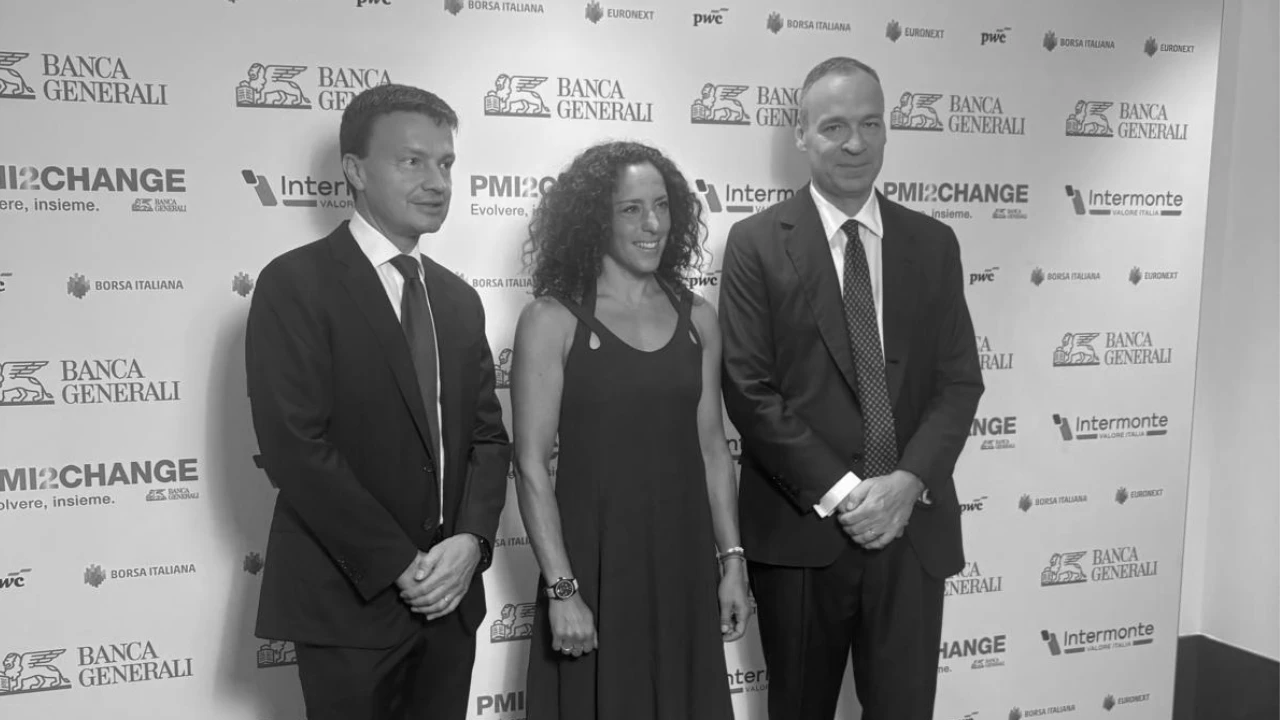
In her speech at Ipem Wealth 2026 in Cannes, Greta Teot, Executive Director and Head of Private Markets at Mediobanca, made her point clear: private markets are not an accessory, but an increasingly structural component of portfolio strategy.
The focus for wealth managers, private bankers and family offices is to integrate them with diversification, transparency and a core-satellite approach.
From product to portfolio construction: the turning point for wealth
The trajectory described by Teot follows the evolution of the sector: from the logic of “selling” individual instruments to a truly holistic view of the portfolio.
Mediobanca started with club deals and vertical funds, solutions that are appreciated because they allow investment in specific and “selected” transactions.
The operational point is that building a broad and continuous allocation—for example, 20%—using only club deals or only closed-end funds is difficult.
Continuity of exposure, investment timing, and liquidity management require a more “industrial” and less episodic structure.
The evergreen effect: continuity of exposure and capital deployment
Discontinuity comes with evergreen funds, which shift the focus from individual fundraising to portfolios built on private markets across multiple asset classes and time horizons.
For asset managers, the impact is tangible: the evergreen structure reduces the risk of “uninvested time” and makes allocation more manageable in daily practice.
This shift makes the private component less tactical and more core, with a replicable and monitorable portfolio logic.
At the market level, Mediobanca Private Banking has announced evergreen initiatives in partnership, such as the royalties strategy with Partners Group announced in November 2025.
The core-satellite model: how to build the architecture according to Mediobanca
To integrate private markets into portfolios, Teot describes a core-satellite system that makes the illiquid component readable and governable.
The core part relies on evergreen funds designed to allow for faster and more stable allocation. In his speech, Teot points to a platform of 12 “growing” funds, with strategies ranging from private equity, private credit, infrastructure, and secondary markets.
The satellite part adds specialization and customization, combining closed-end funds on niche managers and the tailor-made construction of club deals.
Club deals: Italy independently, abroad in co-investment to control risk
When it comes to club deals, the distinction between domestic and international is an important factor in risk management. In Italy, Teot explains that the team operates directly: it seeks out opportunities, meets with founders, and structures flexible transactions.
The structures can be majority or minority, with the aim of aligning the interests of the entrepreneur and the client.
Outside Italy, in the United States or Asia, access is through co-investments with partners to combine quality of deal flow and control of the process.
Allocation: no standard formulas, operating range 5%-30%
On the subject of “how much to allocate,” Teot rules out rigid formulas that apply to everyone. In his speech, he refers to model portfolios developed by Mediobanca which, in terms of risk profile, range from 5% in private markets to 30%.
These percentages are presented as guidelines and not as prescriptions, because they depend on the constraints, objectives, and horizon of the individual investor.
The most striking data, for consulting, is that some clients arrive in extreme cases with portfolios that are even 100% private markets, seeking almost exclusive specialization in this component from the bank.
Selection of managers: overlap risk and “true” diversification
A key step, from a consulting perspective, concerns transparency and the construction of effective diversification.
Teot indicates that the platform would be enriched with about one new fund every two months, without a pre-established maximum number of managers. The condition is that each addition must add real complementarity, not simply multiply similar exposures.
The technical point is to measure the overlap between underlying portfolios: in private credit, the analysis looks at the names and weights of the positions to avoid overlaps that create “hidden” risk.
Due diligence: track record remains central, but it is not enough for evergreen funds
In closing, Teot‘s position remains rigorous: track record is a cornerstone of due diligence and monitoring.
However, the evolution of evergreen instruments requires a broader set of assessments than traditional closed-end funds. The structure, management of capital over time, and dynamics of portfolio composition are changing, increasing the complexity to be managed.
For private bankers and wealth managers, it is not enough to explain the idea of private markets; it must be measured and integrated with liquidity and asset objectives, without any gray areas.