
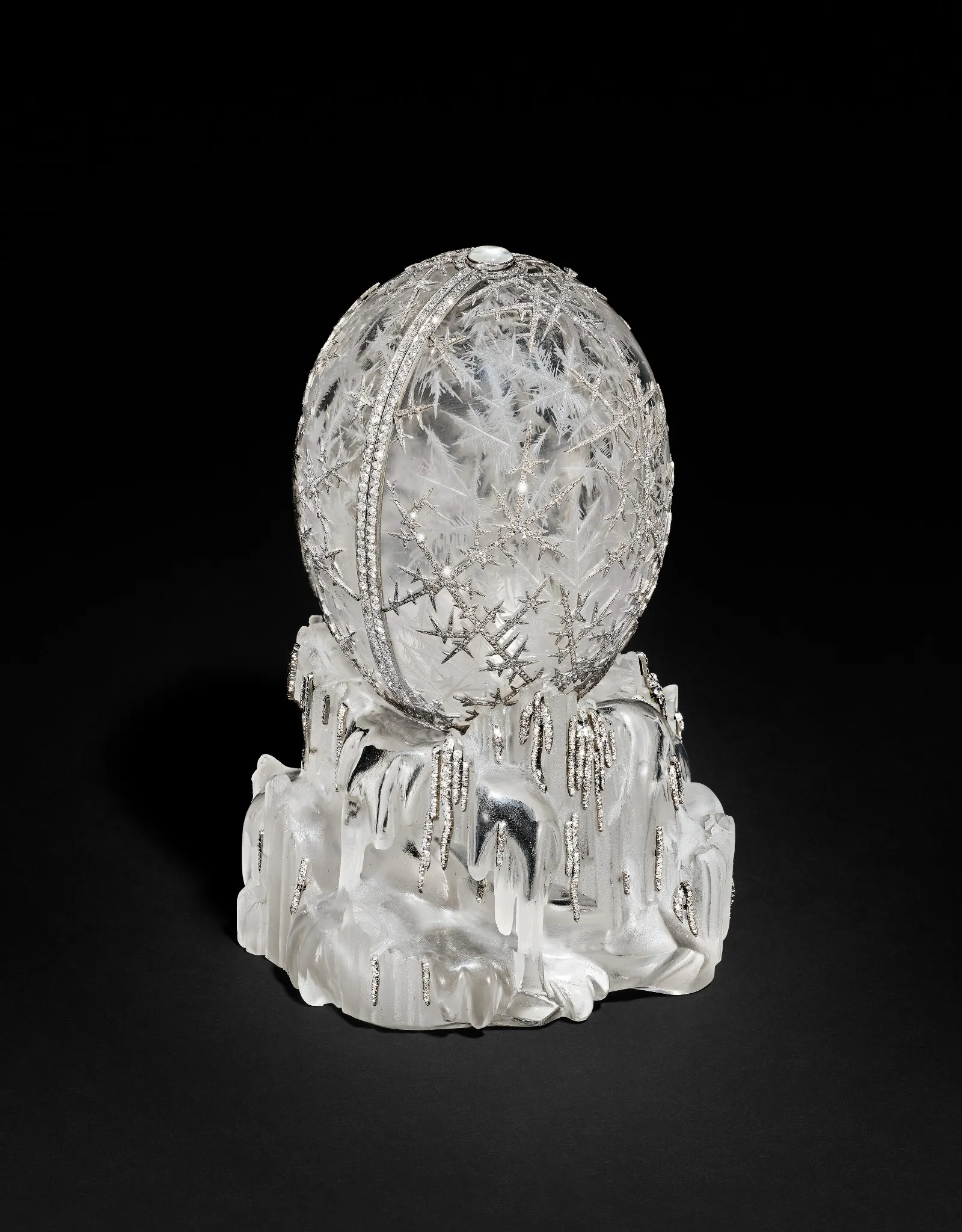
On the evening of December 2, 2025, in London, Christie’s wrote another chapter in the fairy tale of Carl Peter Fabergé. In the monographic auction The Winter Egg and Important Works by Fabergé from a Princely Collection, the 1913 “Winter Egg” reached a stellar price of $30.2 million (£22.9 million). This is the highest price ever paid for a Fabergé piece at public auction. However, the most expensive Fabergé in history remains “the third egg,” the third piece produced by the jeweler, which was found in an antique shop in the Midwest (USA) in 2014. Suspecting its value, the buyer (who had paid only $14,000 for it) had it analyzed at a specialist jeweler’s in London, which bought it for $33 million.
Why is Fabergé’s Winter Egg so expensive?
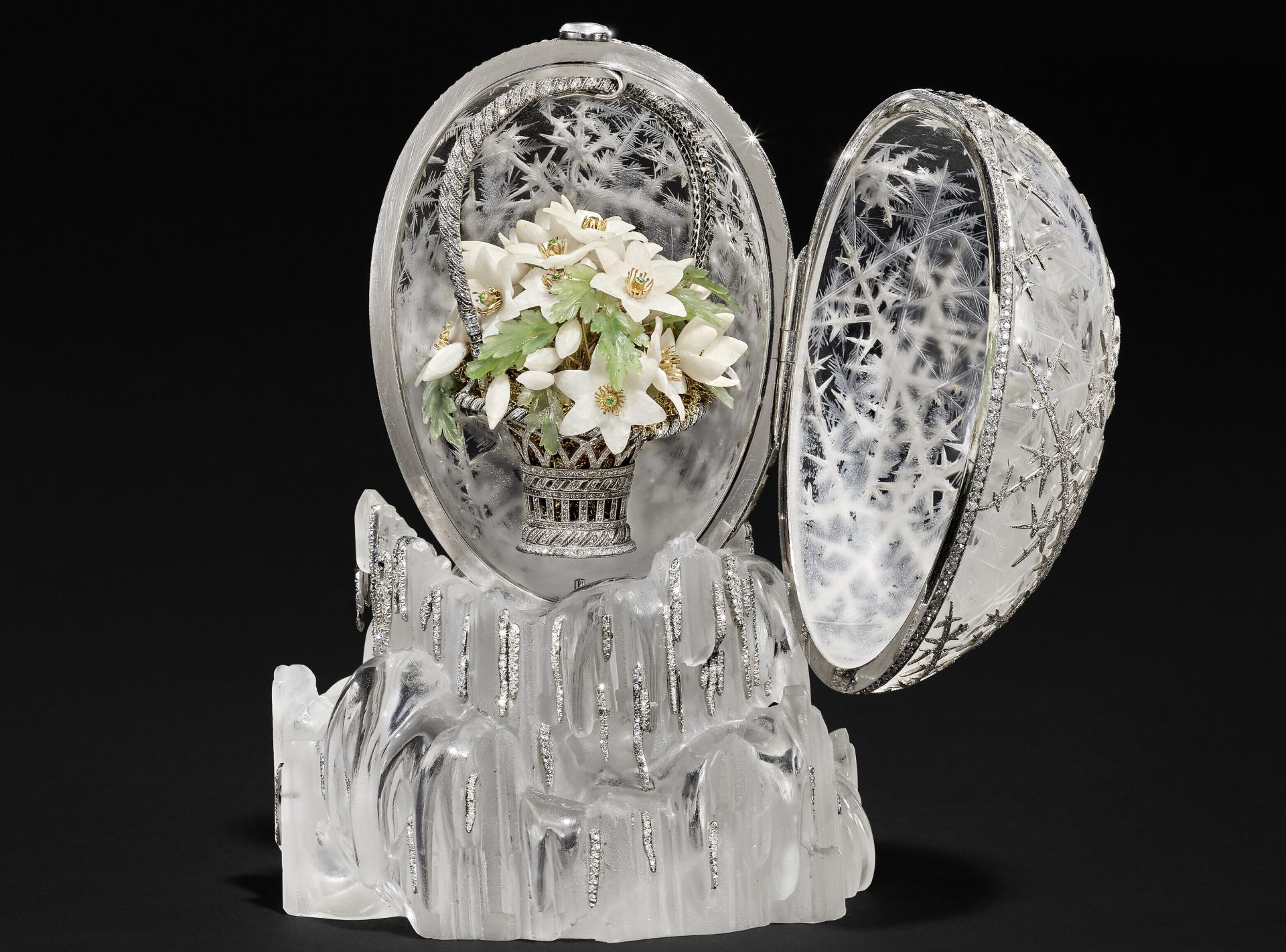
It is one of the most precious objects—in terms of intrinsic raw material content and artistic craftsmanship—in existence on Earth. Carved from rock crystal (a variety of transparent quartz), its exterior features a relief depicting frost, while its interior contains snow crystals. It is positioned on a base that simulates a block of ice close to melting, and all the (few) metal parts are made of platinum: the water droplets, the hinge for closing, the pin that holds the egg upright.
And then a cascade of diamonds, 4000 of them, all rose-cut. The flowers in the basket, which is the “surprise” inside the egg, are carved from wood and enameled in white quartz and nephrite, with stamens and pistils in fine gold. The flowers are actually white anemones, the first to bloom when the snow melts, the first to announce that the long, cold night of the Russian winter is ending and that spring is near.
The Winter Egg was designed by a woman: Alma Pihl, an artist from a family of skilled Finnish jewelers.
A family history
The Winter Egg was commissioned by Emperor Nicholas II from the Fabergé maison in St. Petersburg as a gift for his mother, the Empress Dowager Maria Feodorovna, on Easter Day in 1913, in accordance with the solemn tradition of the Romanov family, inaugurated by Emperor Alexander III in 1885, whereby the Tsar gave his wife and mother a Fabergé egg with a surprise inside every year at Easter.
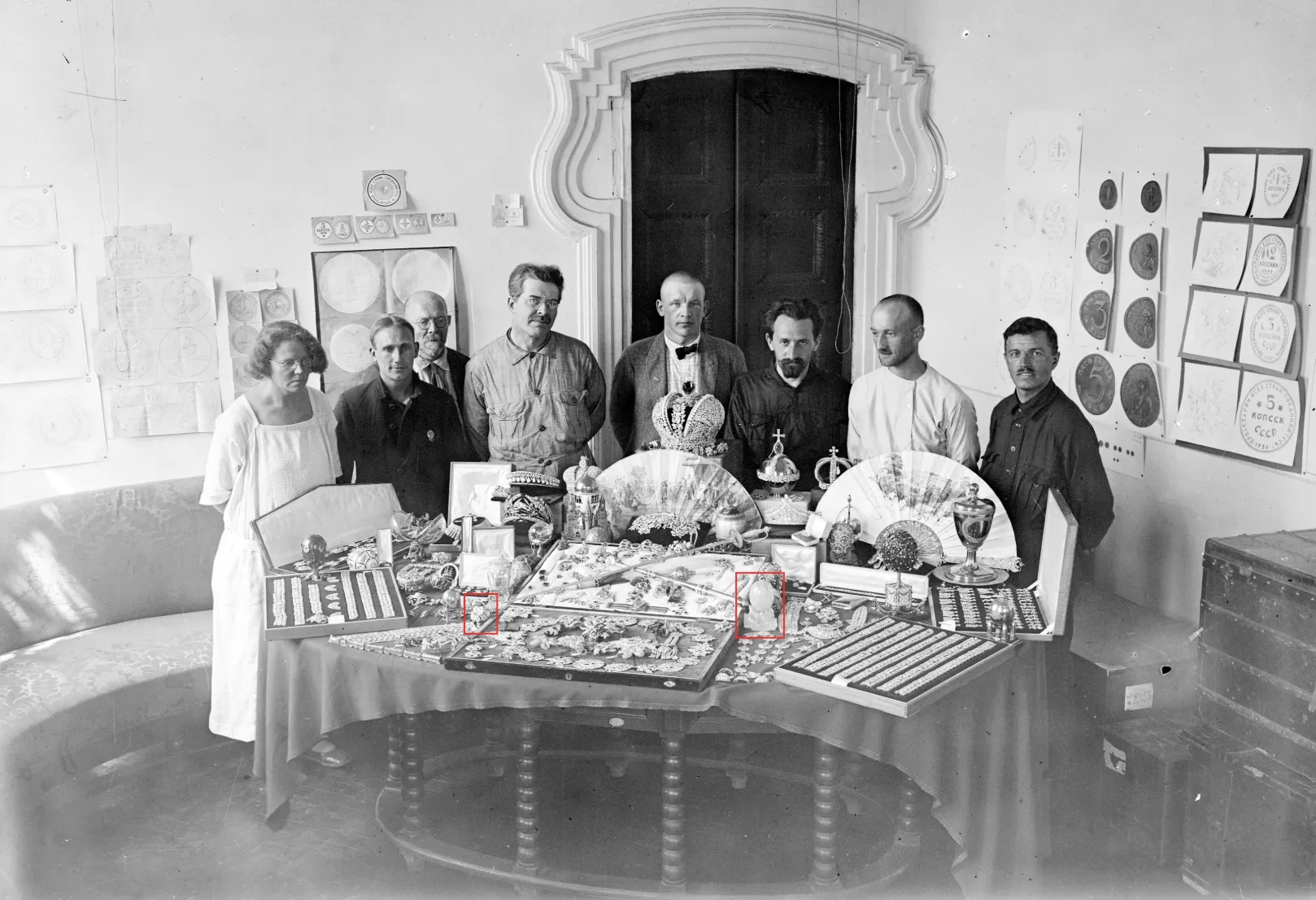
Imperial jewels in the premises of the Financial Administration of the People's Commissariat for Finance in Moscow, including the Winter Egg (right) and its “surprise” (left), 1925
It is important to note that, in terms of collecting, only eggs created between 1885 and 1916, on the eve of the Russian Revolution, are considered valuable: there are about 50 of them, and most are housed in museums.
The Romanovs’ double annual commission was a headache for Fabergé. The pressure to impress the court each time was extremely high. What’s more, the tsar wanted to remain in the dark about the work: he too loved surprises and did not like to be told about them in advance.
Three record sales for Christie’s
This was the third time that the world’s second oldest auction house had sold the Winter Egg. The first was in 1994, shortly after its discovery. Then, in 2002, it was sold for the equivalent of $6.6 million (the original price was always in pounds sterling, as London was the chosen venue for this item).
The final comment from Margo Oganesian, head of Christie’s Russian art and Fabergé department, was: “Christie’s is honored to have been awarded the sale of Fabergé’s splendid Winter Egg for the third time in its history. Today’s result sets a new world auction record for a Fabergé work, reaffirming the enduring importance of this masterpiece and celebrating the rarity and splendor of what is widely considered one of Fabergé’s most refined creations, both technically and artistically. Only a handful of imperial Easter eggs remain in private hands, making this an exceptional and historic opportunity for collectors to acquire a work of unparalleled importance. Christie’s has confirmed its market leadership for Fabergé, attracting bidders from around the world and engaging both collectors and the general public.