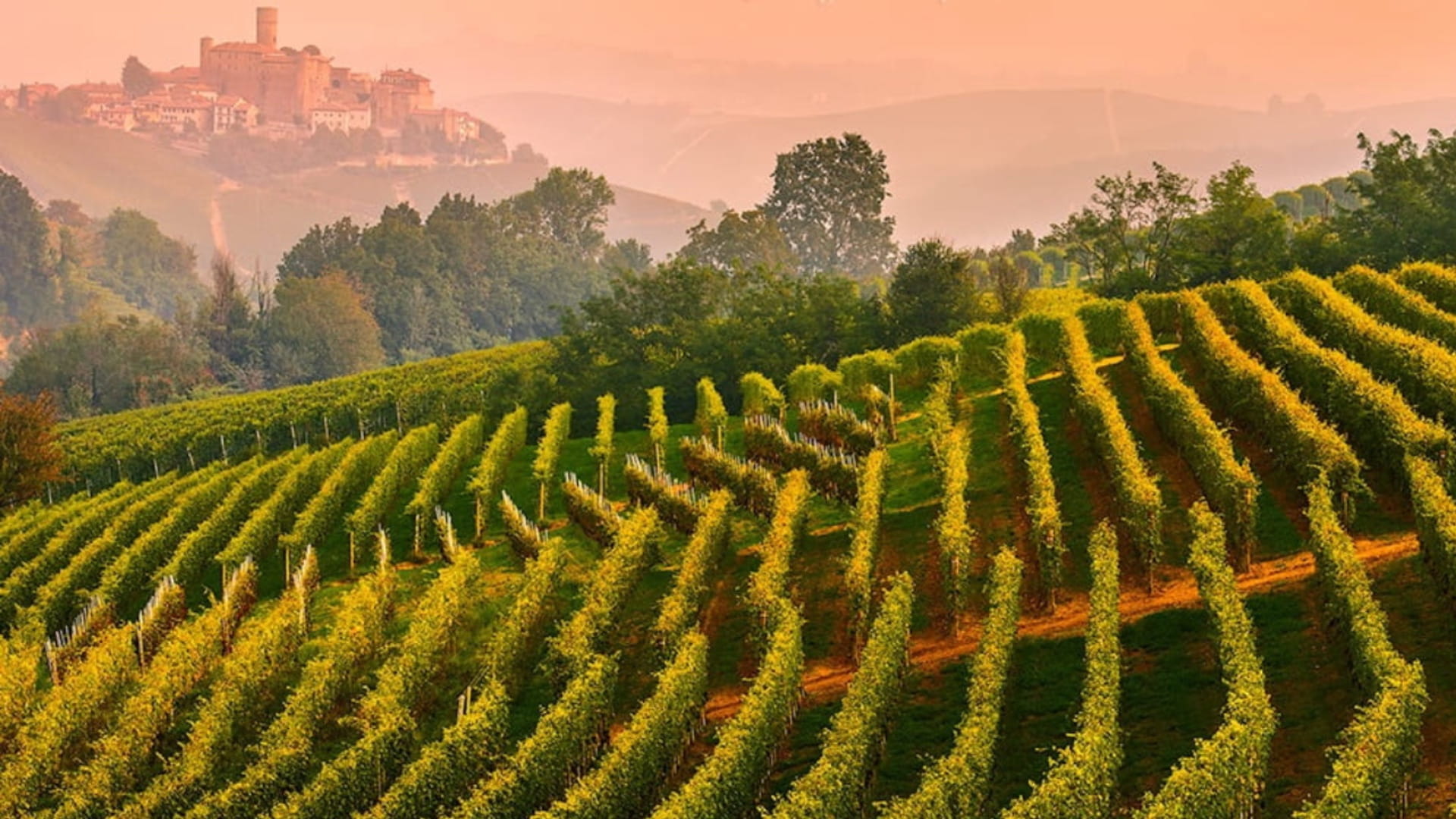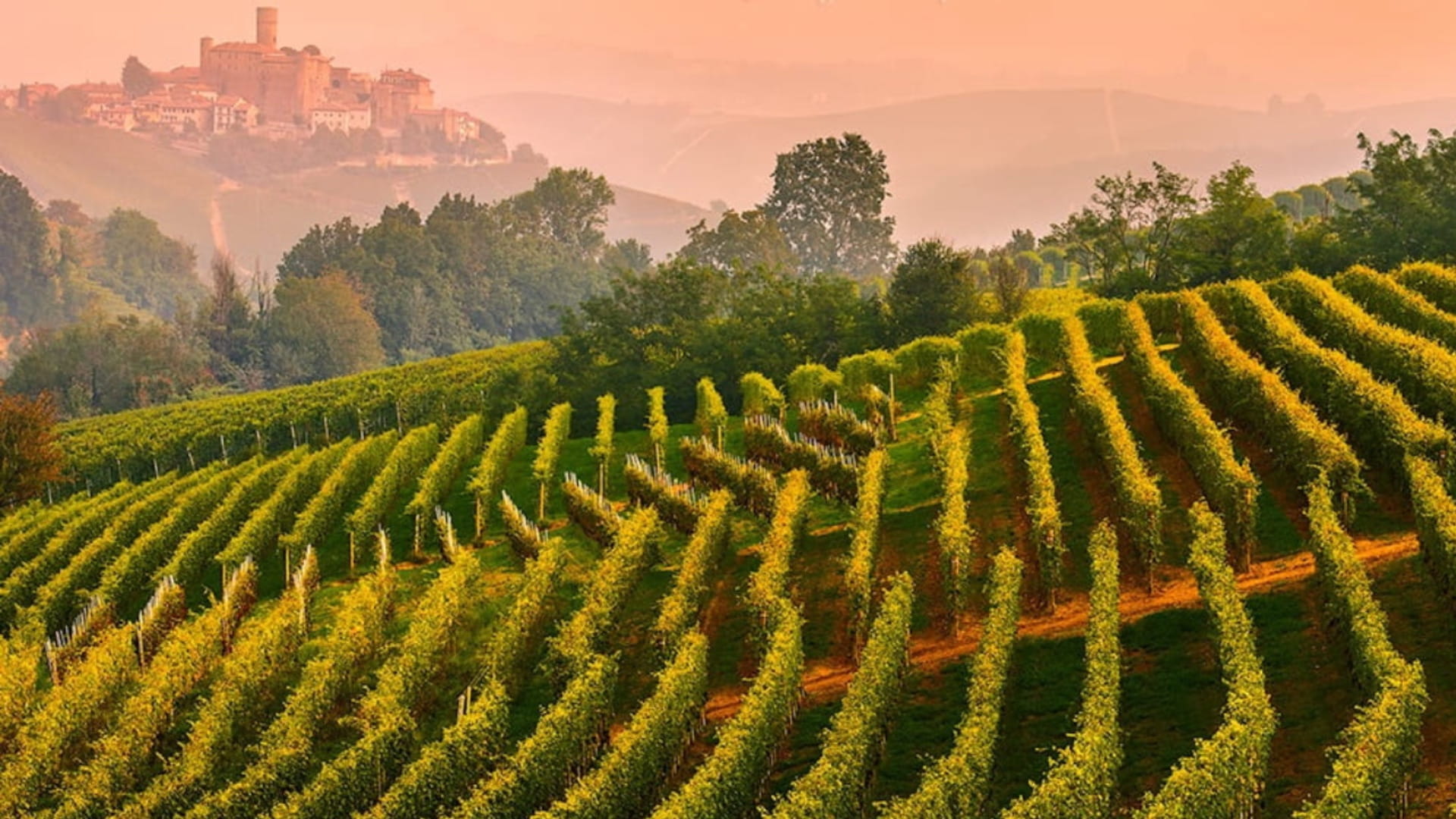
In Italy, where the concepts of investment and profit too often translate into tax advantages, speculative income, or the mere pursuit of trends, there are those who have chosen a different path. Neena and Mike Rees, a cosmopolitan couple with solid experience in the banking and cultural worlds, responded to the discreet call of Umbria, deciding to dedicate time, energy, and vision to it. What they have built at Torre Bisenzio is not just an agri-wine project or an exotic whim: it is the will to create an ecosystem where business, culture, hospitality, and territorial regeneration intertwine. A laboratory of relationships, where entrepreneurship becomes responsibility and philanthropy takes root in the land and community. In this corner of central Italy, the Rees’s have chosen to embrace complexity, combining meaning, impact, trust, and dedication, becoming a living part of the community.
Where does Torre Bisenzio originate? What is the source of such a personal yet universal vision?
“The origin lies in the fusion of two very different paths,” explains Mike. “I come from a long career in finance, 26 years with Standard Chartered, with experience in Asia and Africa. The bank’s motto was Here for Good: being present in countries, being part of communities, and that deeply influenced my values, teaching me to build relationships, to listen, and to give back.” “My story,” says Neena, “comes from elsewhere. I was born in Mauritius to Indian parents and lived for a long time in the United Kingdom. I’ve always had a great curiosity for languages, cultures, architecture. The idea of settling in a place I couldn’t understand made me uncomfortable. But wherever I felt I belonged, I could build. That desire for belonging was the seed from which everything grew.”
How did you arrive in Umbria? And at Torre Bisenzio?
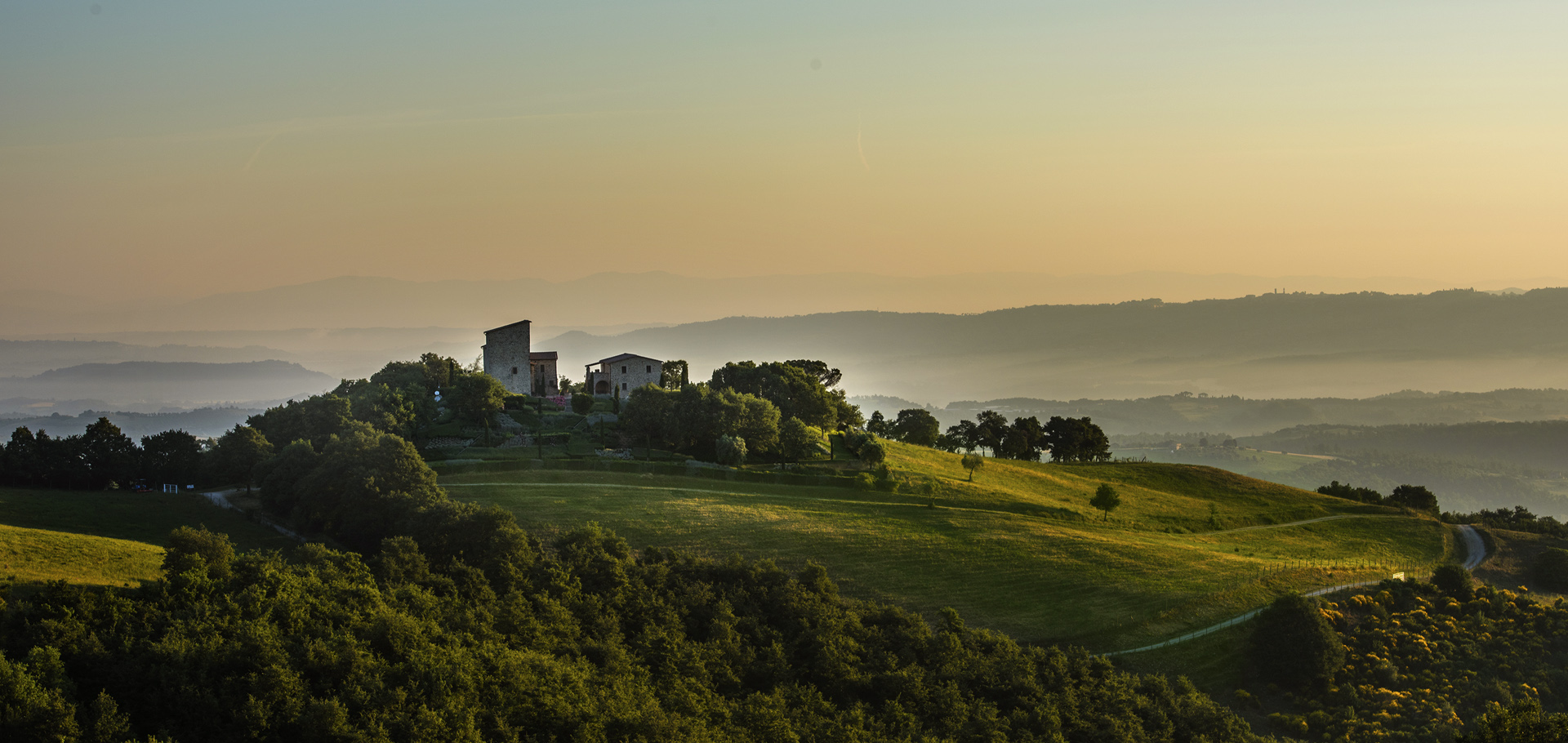
“At one point,” says Mike, “our careers were taking us to London. We realized that’s not what we wanted, so we started looking at Italy. We made many trips to central Italy from Singapore. Umbria attracted us more than Tuscany: less touristy, more authentic, quieter. A true land, still untamed, that asks for respect before it reveals itself.” “We were looking for a farmhouse,” continues Neena, “but none convinced us. Until, on a cold winter day, we discovered a remote hill. The road was impassable; we had to wait until the next day to climb up. But when we saw the view, we immediately knew it was our place. A place that asked a lot, but promised even more.” “It was completely in ruins, but I immediately saw the potential. Neena, just to be safe, had me sign a paper stating it was all my idea…” jokes the former Standard Chartered executive. “We wanted to create something that would bring the land back to life,” adds Neena. “We started with great effort: we were still living in Singapore, I was pregnant, Mike was traveling between there, London, and Italy. The first seasons were difficult, but every step brought us closer to an idea of responsibility”.
And the local community?
“At first,” Mike notes, “we didn’t do enough. We only knew the people working for us. Then we realized how important it was to integrate. Eating at local restaurants, making ourselves known, participating. From that moment, everything changed.” “Some of our collaborators,” says Neena, “experience the wine cycle from start to finish. It’s not just work: it’s a collective narrative that involves them and makes them proud, where personal and professional life grow together constantly.”
What are your founding values?
“Authenticity, sustainability, quality,” answers Mike proudly. “We studied the agricultural history of this land, placed ourselves in the hands of Italian experts in agriculture, farming, and viticulture. We relied on professionals like Andrea Rosati, Francesco De Filippis, Adriano Zago. Every decision is part of a broader design.” “Coming from outside this world,” adds Neena, “we committed to learning, studying, trusting people. And we share everything with our team: every choice, every consultation, every change. Even with the workers in the fields. Transparency generates participation, and participation creates pride.”
You’ve introduced technology and innovation in a land and a world deeply rooted in tradition. How was that received?
“At first, with skepticism,” explains Neena, “but then the results became evident. Those who work with us learn, grow. And often develop their own activities thanks to these skills. Technology does not replace, it elevates work.” “We never impose anything as a principle,” adds Mike. “If something doesn’t work, we change it, we work to improve, not to be right. And when we make mistakes, we admit them. That’s the pact.”
There’s a clear connection between your wines and storytelling. How did that idea originate?
“Our labels,” Mike explains proudly, “tell stories: about the land, our family, the connection between local and global. We want the community to see itself reflected and visitors to understand. Each bottle is a fragment of dialogue between cultures.” “And we offer hospitality following the same principle,” adds Neena. “It’s the same thing: people come back because they feel authenticity, because they’ve experienced real hospitality. It’s not a place from a magazine: it’s a lived-in home, cared for, built over time. A home built, furnished, and inhabited with hands dirty with soil and an open heart.”
How did you deal with the administrative and professional side?
“We found extraordinary financial consultants in Rome who have supported us for twenty years,” says Mike. “And then connections with surveyors, artisans, local administrators. Like our collaborators, they are also from the area. There is mutual trust and no relationship is purely professional: every alliance is built over time.” “We also try to be present in community moments,” adds Neena. “We organize events with the Municipality, we harvest and cook together with our workers, their families, and their friends. The community is part of Torre Bisenzio: it’s not rhetoric, it’s real.”
Can Torre Bisenzio be a replicable model?
“Yes, but it’s not a formula,” Mike clarifies. “You must put in your soul, time, curiosity. You must learn, make mistakes, stay, put down physical and emotional roots. Only then will the land recognize you. Having a project is not enough, you have to live it.”
And your children? What does your project represent for them?
“Our sons and daughters,” says Neena, “come every year with their families and their children love the farm life. For them it’s a place of freedom, discovery, roots. Our youngest son is still learning, he’s learning Italian. I asked him: ‘Do you see yourself here in the future?’ He answered, ‘Yes.’ But you need entrepreneurial vision, beyond love for the place. We don’t want to leave them a burden, but an opportunity. Legacy, for us, is not just inheritance: it’s commitment.”
What advice would you give to those wanting to follow a similar path?
“First, get to know the people and learn the language. Otherwise, why come to Italy? Without listening, there is no community, only consumption. But above all, you must align your expectations with your ambitions. If you seek a meaningful project, you must be ready to be transformed by what you encounter,” conclude the Rees couple with a smile.